 EMOTAG
Do Male and Female Dogs Bond Differently With Their Owners?
A study of 51 Labrador Retrievers found that male and female dogs expressed attachment differently in some situations. It does not mean females love their owners more.
By the Emotag team · 7 min read
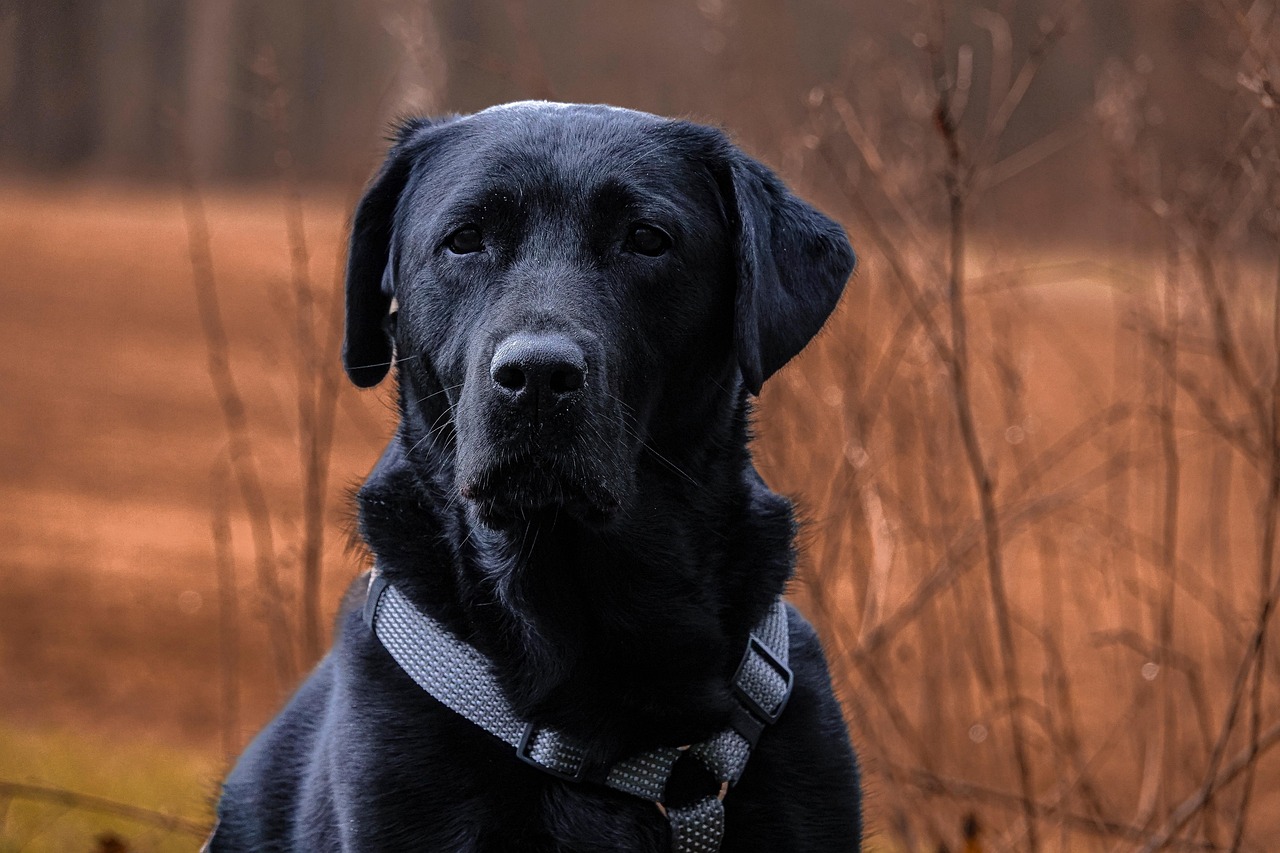
A study of 51 Labrador Retrievers found that male and female dogs expressed attachment differently in some situations. Female dogs were generally more sociable and showed more owner-seeking behaviour when left with a stranger. However, the study does not show that female dogs love their owners more, and the findings cannot be assumed to apply to every dog.
Imagine walking into an unfamiliar room with your dog. There are a few toys, two chairs and a person your dog has never met. After several minutes, you quietly leave.
What happens next? Your dog might stay near the stranger, wait by the door, explore the room or try to find you. When you return, your dog may rush over—or respond in a much quieter way.
These small choices can reveal something important about attachment: the lasting bond that makes a familiar person a source of security. Researchers have long known that dogs can form attachment relationships with their owners. A study published in Animal Cognition asked a more specific question: do male and female dogs express that bond differently?
How do dogs show attachment to their owners?
In attachment research, an owner can act as both a “safe haven” and a “secure base.” A dog may return to its owner when something feels threatening, while the owner’s presence may also give the dog enough confidence to explore an unfamiliar place.
Attachment can therefore appear in several kinds of behaviour. A dog may seek proximity or physical contact, follow its owner, show distress during an unexpected separation, focus on the door after the owner leaves or greet the owner when they return.
No single action proves how strongly a dog is attached. Researchers instead look at how a group of related behaviours changes when the owner is present, absent or replaced by an unfamiliar person.
How did researchers test dog-owner attachment?
The researchers observed 51 pet Labrador Retrievers: 29 males and 22 females. The dogs ranged from seven months to 13 years old. All were healthy, lived with human families and had no known separation-related problems.
| Study detail | What the researchers did |
|---|---|
| Dogs | 51 pet Labrador Retrievers: 29 males and 22 females |
| Age range | Seven months to 13 years |
| Test | A dog-adapted Strange Situation Test |
| Test length | Seven three-minute episodes, lasting 21 minutes in total |
| People present | The dog’s owner and the same unfamiliar man |
| Behaviours observed | Social contact, proximity seeking, door-directed behaviour, exploration, play and passivity |
The experiment used the Strange Situation Test, which was originally developed to study attachment between human infants and caregivers and was later adapted for dogs.
Each dog moved through seven short situations in an unfamiliar room. At different points, the dog was with its owner, with both the owner and a male stranger, with the stranger only, completely alone and reunited with its owner. The researchers recorded the dog’s behaviour throughout the 21-minute test.
The central question was not simply how often the dogs performed each behaviour. It was how their behaviour changed depending on who was in the room.
What did the study find about female and male dogs?
The study found three main differences—and several important similarities.
Female Labradors were more socially engaged
Across the parts of the test that involved people, female Labradors showed a stronger general tendency to seek social contact and interaction than males.
This difference was not limited to interactions with their owners. It therefore does not prove that the female dogs had a stronger owner-specific bond. It suggests a broader difference in sociability within this particular group of Labradors.
Female dogs showed more owner-seeking behaviour during separation
The clearest attachment-related difference appeared when the owner left and the dog remained with the stranger.
Female dogs showed more behaviour associated with trying to find or reunite with the missing person. Their responses changed more noticeably between situations in which the owner was present and those in which only the stranger remained. Male dogs’ responses varied less across these situations.
Another pattern of behaviour may have reflected distress. During the first separation, after the owner left the dog with the stranger, female dogs scored higher than males. The authors suggest that the male dogs may have coped better with that first stressful separation.
This interpretation remains tentative. The behaviour pattern included exploration and individual play as well as aimless movement. Exploration and play can indicate several different things, including attempts to cope with stress, so they cannot automatically be treated as signs of distress.
Male and female dogs behaved similarly in some situations
The researchers found no detectable sex difference when the dogs first entered the unfamiliar room with their owners. They also found no sex difference when the dogs were left completely alone.
The owner’s sex did not significantly affect the dogs’ responses. Age influenced some behaviour patterns, but the study was not designed primarily to investigate age differences.
Does this mean female dogs love their owners more?
No. This study measured observable behaviour, not the private emotional experience that people call love. A dog that seeks less physical contact or displays fewer obvious signs of distress may still have a strong attachment to its owner.
The findings are better understood as possible differences in how attachment is expressed. In this sample, female Labradors were generally more social and showed stronger owner-seeking behaviour during separation. Male Labradors appeared less socially motivated and showed less behavioural change when the owner was absent.
The researchers noted that this pattern resembles some reported differences in adult human romantic attachment. On average, women have been described as showing more closeness-seeking and attachment anxiety, while men show more self-reliance and avoidance. Comparable sex differences are generally not found in the attachment behaviour of human infants.
This comparison is a hypothesis, not proof that a dog-owner relationship works like a human romance. The authors’ broader suggestion is that the dog-owner bond may be more complex than the familiar comparison between a human infant and a parent. It may also share certain features with adult friendship and companionship.
Can a dog’s sex predict how attached they will be?
Not reliably. These findings describe average differences within one relatively small group. They should not be used to predict the personality or attachment style of an individual dog.
The study included only 51 Labrador Retrievers, so the results may not apply to other breeds. The number of neutered males and spayed females was small and uneven, which meant the researchers could not determine whether sex hormones influenced the observed behaviour. The same male stranger participated in every test, and a different stranger could potentially have affected the dogs’ responses.
The dogs also had no known separation-related problems. The results therefore cannot be used to identify or explain separation anxiety.
Breed, age, health, previous experiences, personality and the dog’s relationship with a particular person may all be more useful than sex when trying to understand an individual dog.
What should dog owners take from the research?
The most useful lesson is to look for patterns in your own dog rather than relying on a stereotype about male or female dogs.
Notice what changes when you leave and return. Does your dog follow you, watch the door, seek contact, stop exploring or recover quickly once you are back? Consider the situation around the behaviour as well. Waiting by a door in an unfamiliar laboratory does not necessarily mean the same thing as waiting by the door at home.
No single behaviour tells the whole story. The contrast between situations—and changes from a dog’s usual behaviour—can be more informative than whether the dog performs one particular action.
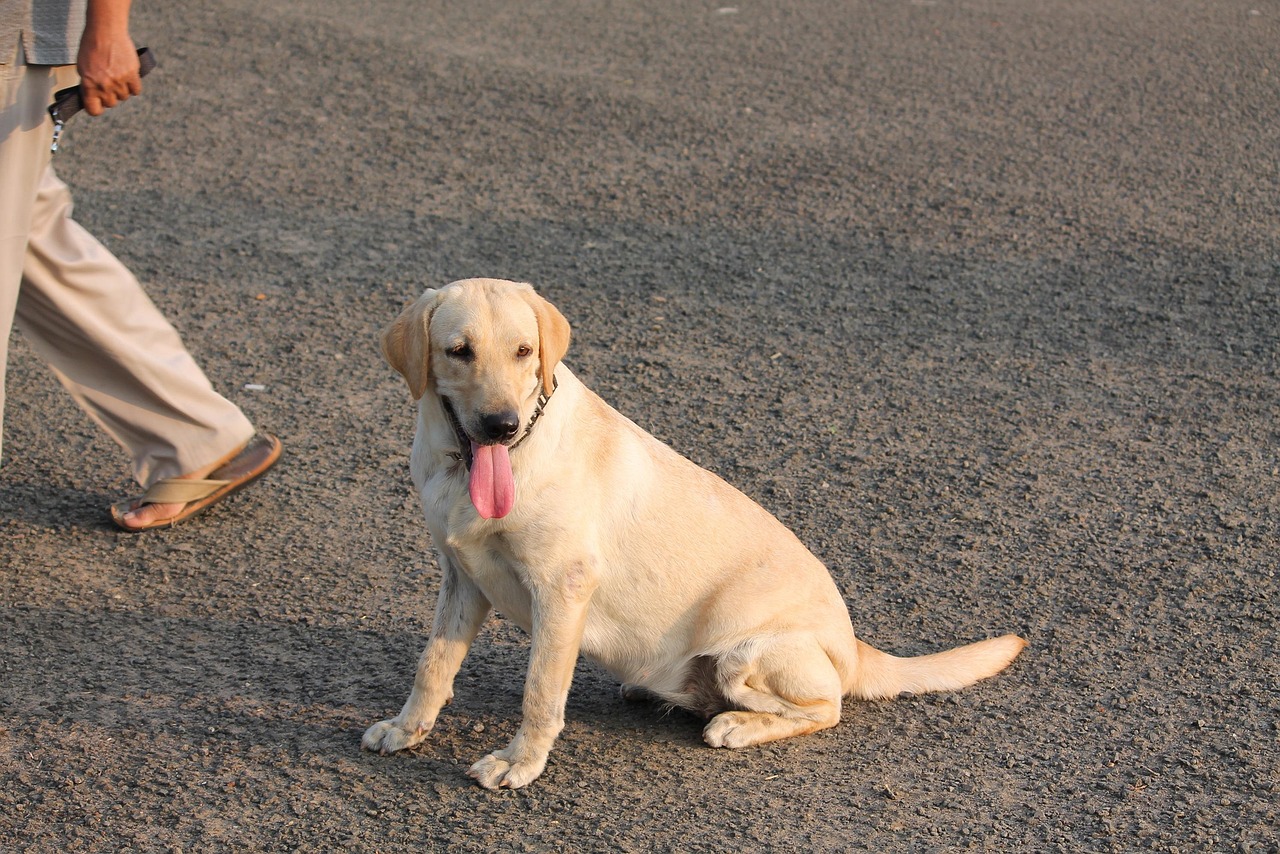
When a dog waits by the door in an unfamiliar place, the behaviour may look simple. Behind it can be a relationship shaped by security, experience and the dog’s individual way of seeking connection. Male and female dogs may sometimes express that connection differently, but difference is not a measure of who loves more.
The study
D’Aniello, B., Scandurra, A., Pinelli, C., Marinelli, L. & Mongillo, P. Is this love? Sex differences in dog-owner attachment behavior suggest similarities with adult human bonds. Animal Cognition 25, 137–148 (2022). Open access. Read the paper →
Read next · Science
Can Dogs Learn Toy Names Just by Listening to Us Talk?